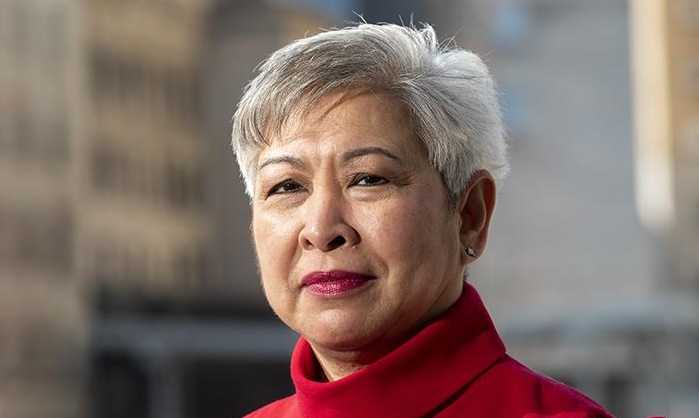
Civic Science Funders Collaborative Advisory Series | Co-Creating Health for Communities and Environments: A Civic Science Conversation with Maureen Lichtveld
March 19, 2026
This series features conversations between philanthropists and exemplars working on the ethical and societal implications of emerging science and technology. Highlighting a variety of perspectives, these dialogues seek to inform and inspire philanthropists, as well as others who want to contribute to building a robust and engaged future of transformative science, with expanded benefits for all.
“Are the shrimp safe to eat?” After the 2010 Deepwater Horizon oil spill in the Gulf of Mexico, this was a top concern for coastal communities. It was also a question that couldn’t be answered without local engagement and research of the kind Maureen Lichtveld, who then chaired Tulane University’s Department of Environmental Health Sciences, has championed throughout her career as a leading environmental health scientist. In a recent conversation, she explained how getting to the bottom of this question sparked locally engaged research on priority questions identified by the community.
After Dr. Lichtveld graduated as a physician, she recalls, “My passion was to always have that stethoscope around my neck, wherever I went. To make people better.” She worked with people in the Amazon rainforest in her home country of Suriname where she had a series of “public health moments” that would define her professional trajectory, demonstrating the importance of working with community leaders and understanding how individual and community health is interconnected with the environment.
Since immigrating to the United States, she has designed research tools to guide studies in communities near hazardous waste sites with the Centers for Disease Control and Prevention and the Agency for Toxic Substances and Disease Registry. She has conducted research to understand and build community resilience to the cumulative impact of stressors in their environment. And she has led institutions, including the School of Public Health at the University of Pittsburgh, where she now serves as Dean and as Jonas Salk Professor of Population Health and Professor of Environmental and Occupational Health. She serves on numerous advisory boards, including for the Burroughs Wellcome Fund’s Climate + Health Excellence Centers, and she chairs Pennsylvania’s One Health Consortium, which builds partnerships across disciplines and sectors to improve health for people, animals, plants, and ecosystems.
The transdisciplinary One Health approach underlines the complexity of interactions between natural and human environments and health—an area where Dr. Lichtveld says artificial intelligence is becoming an important tool for combining and assessing a vast array of data sources, even as “it doesn’t take away the environmental health scientist who then has to interpret the data and make decisions in terms of intervention.” And it makes data collection in partnership with vulnerable populations—where funding is “less than minimal”—all the more important.
Dr. Lichtveld says our current moment is “a wake-up call that it is time for us to expand, diversify, broaden our family, broaden the friends of health, broaden the friends of civic society.”
Just as environmental public health demonstrates the necessity of working in partnership across communities, physicians, policymakers, and scientists, she says, “We have to step up together. The time is now.”
— Elizabeth Christopherson and Louis J. Muglia
Elizabeth Christopherson is President and Chief Executive Officer of the Rita Allen Foundation. Louis J. Muglia is President and Chief Executive Officer of the Burroughs Wellcome Fund. Both foundations are Civic Science Fellows funding partners and members of the Civic Science Funders Collaborative.
Louis Muglia: What attracted you to environmental public health and the work you’ve been involved in? What experiences made this field your mission and passion?
Maureen Lichtveld: I graduated at 23 as a physician, and my passion was to always have that stethoscope around my neck, wherever I went. To make people better.
I wanted to serve those who were most vulnerable in the Amazon rainforest of the country where I come from, Suriname, in South America. Starting with a lineup of people, sometimes 120 a day, in the sun, without any air conditioning, treating one person at a time, it didn’t take long for me to have an aha moment.
The first aha moment happened because I took over an area of 26,000 inhabitants where the childhood vaccination rate was 5 percent. Working with the Pan American Health Organization, and supported by the U.S., I was able to have the vaccines that I needed, but not the people to administer the vaccines.
So I learned the importance of community leaders. I trained nuns and tribal leaders to become what we now call community health workers. With them as a team, we were able, in three years, to increase that immunization rate to 95 percent.
That was my first public health moment.
As I went on, my career in medicine became less and less prominent. My passion was the impact that I had collectively with community leaders to improve health, especially the health of kids.
It also became clear that whatever I did, it had something to do with the environment. I was the local coroner, the local food handler. I delivered babies from human beings and goats. That brought together for me both public health and the importance of the environment, hence environmental public health.
“The health of the environment and the health of people is inextricably linked.”
Elizabeth Christopherson: How has the field of environmental public health changed since then? How has your work had an impact on that arc?
Maureen Lichtveld: The health of the environment and the health of people are inextricably linked. If the environment is sick, we human beings are sick as well. If we are poisoning our environment, as we have done to the climate, we are sick as well.
Importantly, too, in environmental public health we look at the person not only as a whole person, but we relate to that person and engage with that person as part of a community. If the community is vulnerable, so are the individuals living in that community.
There are two parts of vulnerability: physical health and mental health. My focus is on the interaction, the interconnectedness, and the cumulative impact of physical stressors, in this case chemical stressors, and non-chemical stressors.
There is stress for almost a quarter of the pregnant women that I’ve worked with in Suriname. Where stress is higher, it is a more impactful determinant of a birth outcome than any physical adverse impact. It makes it clear that mental health is such an important component of overall health.
Elizabeth Christopherson: What developments in the policy and political ecosystems are influencing your focus and questions?
Maureen Lichtveld: I am an immigrant. When I immigrated to the U.S. I ended up working, and had an honorable career, in the Centers for Disease Control and Prevention, and particularly in the Agency for Toxic Substances and Disease Registry. I became fascinated with policy, and how we use civic societal values, norms, and ethics to develop policies that are science-driven and prevention-oriented.
When I was put in charge of developing the nation’s Medical Waste Tracking Act in 1988, I knew that I was answering questions for people who went to the Atlantic City beach and were encountering needles. How can we make sure you’re safe walking on the beach?
A passion about environmental public health can only be realized if there’s policy development, not as an afterthought, but policy that’s informed by science. It also requires implementation and the appropriation of funds to implement the policy. And above all, it requires the enforcement of that policy, because otherwise, it’s just a piece of paper.
Policy development takes a civic lens to be meaningful, to be impactful, and it’s often forgotten in the quest of creating rules. Civic society is better off by having science-driven policies that are implemented with communities and by communities, not to communities.
Louis Muglia: That’s an extremely important point. Partnering in a way we haven’t traditionally is going to be key to success.
Maureen, you have been chairing Pennsylvania’s One Health Consortium. What are some of the challenges and successes that you’ve experienced, and what are the takeaways in terms of how science and scientists should participate in decision making?
Maureen Lichtveld: Currently, to my knowledge, I’m the only dean of a school of public health that leads the One Health Consortium at the state level. How did it come about? We have veterinarians, we have representatives from the Departments of Agriculture and Health, we have ecosystem scientists, and we have a lot of people involved in the Pennsylvania One Health Task Force. The more we began to grow, the clearer it was that the task force needed a home that was broader and that was more multidisciplinary.
I took it on. I now have five veterinarians working in the School of Public Health, and one even chairing the Department of Infectious Diseases and Microbiology.
One of the challenges we overcame very early on is, how can we represent all the disciplines? That’s not easy. If you’ve always thought in your own lane, so to speak, how could you have a conversation between a veterinarian and a physician, between an owner of a farm and students who are taking a course in climate and health?
Climate plays an important role as a driver in health in general, but a particular role in the context of One Health, as does, for example, antimicrobial resistance. In the past, we talked about antimicrobial resistance as something that happens in humans who take their antibiotics too long or not long enough when they have an infection. But increasingly, antimicrobial resistance is a real challenge with livestock, whether it’s chickens or cows or any other animal that is part of our food profiles. That’s a whole different civic story.
We were able to bring those areas together in our first joint conference, and I’m inviting members of the civic science network to join us in June this year for our second Annual Meeting of the Pennsylvania One Health Consortium.
At the meeting, Faculty, the community, policymakers, and the pharmaceutical industry come together in partnership to address issues of science, and also we are very excited about opportunities in teaching One Health. So we’ve had a lot more successes than challenges.
The way to overcome the challenge very early on is to not only recognize, but really deliberately implement a transdisciplinary approach.
Elizabeth Christopherson: As you incorporate public engagement, whether in schools or community organizations, with policymakers, or in different forums, what are your goals? What is an example of how that engagement has influenced your work?
Maureen Lichtveld: I was at Tulane when the Gulf of Mexico oil spill happened, several years after Hurricane Katrina.
People in New Orleans are seafood-loving and seafood-eating communities, and a worry was, are the shrimp safe to eat? That was the question posed by the community to someone talking about whether the seafood was safe to eat, who had calculated, using a general risk-assessment paradigm, that the average person in the U.S. eats about four shrimp a day.
Upon which a Vietnamese farmer said, “You mean four pounds of shrimp? Because that’s what we are eating on our po’boy, not four shrimp.”
So what we then did is we went to the community and said, what are your concerns? And they said they had three concerns: Is the seafood safe to eat? Is the air safe to breathe, given the explosion? And what will happen to the kids whose moms were pregnant during the explosion?
We took those three questions and designed an entire research consortium around it, which was subsequently funded by the National Institute for Environmental Health Sciences of the NIH. We took a very community-engaged approach to address their concerns using the science that we contributed.
Louis Muglia: Your career has spanned this enormous and critically important topic of public health, environment, and One Health, which is involving multiple sectors, multiple disciplines, multiple silos that typically haven’t interacted in the past. What have you learned in terms of bringing these different voices together to create a shared vision moving forward that can impact society in an effective way? All of those voices are needed, and everybody has to have a voice in the decision-making process. When you bring teams together, how have you thought about really fostering the interaction that results in progress and impact?
Maureen Lichtveld: There’s this old cliche of everybody having a seat at the table. Often, there’s no longer a table to be seated at.
First of all, you have to realize—and this is so embedded in public health—you never do things solo. The interdependence and the interconnectedness are key. When you lead in a collaborative fashion, you lay the groundwork, whether it’s sitting on the grass, or at a table, or standing, wherever you are. That’s the first step.
Second, and maybe even more important, is you’re never done. You have to work at it all the time, every time. Just when you think you’ve made progress, there is another segue or left-field issue that you have to deal with.
As a leader, it’s critically important that you are true to yourself, and this is not something that physicians are very good at. In general, physicians are not very good at saying, “I don’t know.” Because you ought to know. Your patient expects you to know.
It’s okay to say, “I don’t know, but I will find that out.” And that’s the promise you make.
There is a very established framework for engagement coming from the International Association for Public Participation. It is a spectrum of five levels of community participation, from informing, to consultation, to involvement, to collaboration, all the way to empowerment. How often do we say we’ve empowered the community, and what people really did is provide some flyers?
“How often do we say we’ve empowered the community, and what people really did is provide some flyers?”
Truly to engage in a very siloed world is to involve and collaborate. When you involve, you promise a group of people, whether they’re a community or a group of stakeholders, that you will listen and engage them in options. When you collaborate, you take it one step further. You not only say that you will entertain all the options possible, but you will make that decision on the option that you choose collaboratively.
For environmental health particularly, that is the most successful strategy when you do community-engaged, community-based participatory research. It’s not enough to do the research; you also need to do the implementation in a participatory and engaged way. It’s critical to co-create that study, that intervention. That’s exactly what we did when we co-created the Caribbean Consortium for Research in Environmental and Occupational Health in Suriname. We did that when the train derailment happened in East Palestine, Ohio. The commitment to co-create takes more time. But in the end, the implementation becomes much easier and the impact larger.
“The commitment to co-create takes more time. But in the end, the implementation becomes much easier and the impact larger.”
Back to that oil spill, we were able to show that the contamination was not at the level that it would give us significant health concerns for eating the shrimp at that time. Had we not gone shrimping with the fisherfolk and analyzed what they caught and what they ate, which is not what they sell on the market, we would have never had that level of trust for them to decide it was okay to eat the shrimp.
Elizabeth Christopherson: What advice might you give to early-career researchers about engaging with ethics and policy in communities? How do we think about better preparing future scientist–leaders like you for this kind of engagement?
Maureen Lichtveld: I can’t compare the trajectory of an early-career scientist now versus when I started. It looked infinitely simpler than now.
If you think about a family, you’re surrounded by that great-aunt, that great-grandmother who taught you moral values. That sense of family is often so difficult to get now.
We also did not have to deal as much with deliberate misinformation and withholding of facts.
Yet, early-career scientists have a really exciting trajectory, because of the assets that are there. And you are constantly challenged to think why you do this in the first place. The first thing to do is provide information that’s factual to the person who deserves it—not through social media, but between you as two people. The data that you collect is owned by the individual who trusted you, who gave you their blood, their urine, their information, their stories. So your first obligation is to them.
I am also passionate about growing our public health workforce. This is my fifth year of bringing in juniors and seniors from public high schools in Pittsburgh and connecting them with our students at the master’s, undergraduate, and the Ph.D. level, and also connecting them with a faculty mentor. When they join Pitt Public Health in June, they hardly know what public health is, and by the end of the program they talk about chemicals and maternal and child health, and climate and health, as if they were with us for ages.
That gives me the energy and the love for what I do.
Louis Muglia: What do you see on the horizon for your own work and the field of environmental public health? How is it going to capitalize on recent advances in climate science and biomedical research? Where are there applications for artificial intelligence, and what are the ethical challenges?
Maureen Lichtveld: Let me start with the latter. We don’t have to be afraid to use AI. We are using advances in AI as a tool, not as the driver, but as a tool to help us predict better where, for example, the next contaminant outbreak could be, where the next climate crisis will be, where the next pandemic will be. How can we use it to protect communities?
How do you make sure that the human being is still in charge? How do you make sure that it’s really the analysis that we do, and we use AI not to replace human thinking, human feelings, the civility and the ethics that humans bring?
But once we can use it as a tool, particularly in environmental health, it is an important tool. Let me give you an example. Because of what’s happening with climate and severe weather conditions, Saharan dust from Africa is increasing childhood asthma in Puerto Rico and in South America.
If we’re focusing on a community who’s surrounded by hazardous substances, you’d have to use air quality data, water quality data, soil data, and precipitation data, and integrate the presence of Saharan dust to answer how do we help that child with asthma.
AI as a tool is helpful to bring together and interrogate disparate data sources. But it doesn’t take away the environmental health scientist who then has to interpret the data and make decisions in terms of intervention.
With respect to environmental health, we’ve come a long way. We now can seamlessly connect what we called in the old days “the bench to the trench.” Basic science, to the bedside, to clinical science, all the way to population science.
It is our obligation to take research that is developed in a basic science setting, where you learn about mechanisms and biology, to help people who are already ill, but most importantly, to prevent people from becoming ill. We work through that entire science continuum, from bench to bedside to population. It’s our obligation to use a public-health lens to then make a difference in communities.
Louis Muglia: If I can probe into one other aspect of AI that gets a lot of attention, AI mines data that is available. The communities we try to serve are often underrepresented in those databases, so you can get decisions made by AI tools that are uninformed for the populations. How do we guard against a lack of information driving some of the decisions we make?
Maureen Lichtveld: The old adage of garbage in, garbage out still counts here, regardless of how sophisticated the tool is.
We’re often very moved by the aftermath of a disaster. We are nowhere to be found in between disasters when data need to be collected. It is in the inter-disaster period. If you know that the southern U.S. is hit time and time again by hurricanes between June and November, in the inter-disaster period we need to collect data on those most vulnerable.
If you think of the disaster-management cycle, and you look at the amount of funds or other resources that go into preparedness compared with response, it’s less than minimal.
Collecting data, particularly about vulnerable populations, in the inter-disaster period is as ethically and morally important as responding after a disaster.
That’s not sexy, and there is limited, if no, funding to be had. I’m passionate about what we do in epidemiology, the foundational science of public health, because those are the kinds of cohort studies we need when a disaster—whether it’s a change in the climate or a climate crisis—is just humming in the background. It’s not in the forefront. But that’s when your data becomes so critical. Like that example of how many shrimp people eat, having local data will let you make decisions that are tailored to that community.
Elizabeth Christopherson: I am leaning in with inspiration. Since part of the goal of this conversation is to inspire the philanthropic community to think about new levers, what is your advice for our philanthropic colleagues?
Maureen Lichtveld: In the context of public health, the challenge is not only for the funder—the challenge is also to us. What is it that we need to do to inspire funders?
We in public health, unlike medicine, we don’t have a thankful patient who wants to give a lot of money to advance that area of healthcare. We have a whole lot of thankful communities who have much fewer assets.
But what we do have is the opportunity to work with philanthropists to say, if you want to stop addressing issues symptomatically, if you want to see return on investment in a sustainable way, then that’s what public health is about. You can see what the impact is, time and time again. Whether it’s funding that junior scientist or that high school student, you can see your funds go much further.
The time for philanthropic leaders to come together is now.
Frankly, we’ve been somewhat complacent in depending on the usual sources of funding. This is a wake-up call that it is time for us to expand, diversify, broaden our family, broaden the friends of public health, broaden the friends of civic society, and step up.
We can’t step up alone, and that’s where we started the conversation. We have to step up together. The time is now.
“We have to step up together. The time is now.”
_____
Learn More:
– Maureen Lichtveld’s bio and select publications
– Pennsylvania One Health Consortium and the National Academies of Sciences, Engineering, and Medicine’s One Health Action Collaborative
– IAP2 Spectrum of Public Participation
– Maureen Lichtveld in The Conversation on ways climate change and population growth combine to threaten public health
– Resources for civic science funders
– Taking a Climate and Health History: A One Health-Informed Approach to Primary Care and Services
Maureen Lichtveld’s recommendations for funders:
– Work in partnership to invest in public health for sustainable and long-term impact across communities and populations.
– Contribute to diversifying funding sources for public health.
– Help make the case to broaden the friends of public health and the friends of civic society.
– Support disaster preparedness and data collection, particularly in vulnerable populations, in the period between disasters.
– Recognize the interdependence and the interconnectedness of public health and the need for long-term, engaged, collaborative leadership for greater impact.